The long road of repairing birth ‘marks’


Two weeks ago my 14-year-old daughter, Moira, had surgery. Not relating to anything life-threatening, no surgical response to a scary diagnosis, but surgery nonetheless. It was the third attempt to graft bone into her hard palate.

Having been born with a unilateral cleft lip and palate, Moira’s baby smile was extra wide and the inside of her mouth, a veritable canyon of openness. Aside from the expected eating issues, the cleft was merely cosmetic.

I prefer the term birth “mark” to birth “defect.” Well-meaning people would see her baby self and remark how lovely she’d look after surgery. I’d gently remind them, “she’s lovely now.”
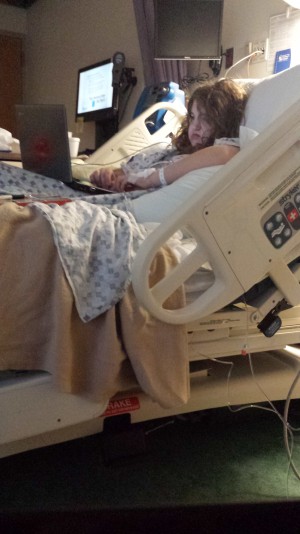
2014-05-16 07.12.21Her recent trip to the OR was one of many surgeries she’s undergone. At six months of age, University of Iowa doctors closed Moira’s lip. At 1-year, her palate. Then there were the holes (fistulas) that popped open in her palate, requiring skin grafts from her hip to close them. Like many other children, Moira also had a couple of sets of ear tubes put in, as well.

Then in 2nd grade, doctors made the first attempt at grafting bone from her left hip into her hard palate. The reasoning behind the graft was to allow Moira as natural a smile as possible. Often times, children born with cleft palates are missing teeth in the area where the face and skull didn’t fully come together. By grafting bone into the open palate, it allows doctors to either move teeth into the area or install implants.

Unfortunately, within the first couple of weeks after this first graft, tiny shards of bone began escaping and by the one-month post-op appointment, doctors confirmed our fear: the graft failed.

In 3rd grade, a second attempt was made. Once again, by the second week of post-op, she began handing us tiny shards of white bone. I felt sick.

Despite the emissions, the otolaryngology team believed some of the graft did take, which put Moira in a holding pattern, of sorts. No more surgeries until after braces.

Last spring the braces went on and after several months of moving teeth, we were informed x-rays showed there remained insufficient bone in the hard palate to continue moving teeth, that enough bone did not survive the 2nd graft five years earlier and she’d need a third.

I felt that old flutter of panic rise in my chest. I wanted to scream and holler that my daughter had to go through this, again and AGAIN! It wasn’t fair. And then the panic passed . . . even Moira would admit she’s got a pretty great life. Her “problems” are cosmetic. She’s a healthy, happy, normal kid!

Not only did Moira’s attitude help fend off the demons of dread, but the doctors working on her were a new team. Rather than go through the otolaryngology department at the University of Iowa, her orthodontist referred her to UI’s dental department where he teaches weekly and is “hands-on” with her team there.

After meeting with this team, I felt a little less scared. Their approach was more aggressive noting Moira would be placed on an antibiotic immediately after surgery, the bone would be harvested from the opposite hip, or as they put it, “a fresh site,” and then warned, “you’ll be coming out here a lot” because of Moira’s history with rejection.

An aggressive approach was music to our ears. I didn’t care if we had to drive daily or stay in a hotel, I loved the idea of these doctors keeping a close eye on her.

There were a host of other issues, minor in comparison, but pressing nonetheless. For instance, Moira plays trumpet, would she be able to continue? How limited would her other activities be?

Her team assured us that after 4-6 weeks of recovery, Moira could likely resume her normal activities. Timing proved key. To minimize any chance of being jostled, bumped or hit, we scheduled surgery as close as possible to the last day of school. May 15 was the best they could. We opted to keep her home for the remaining 10 days of the school calendar, working with her teachers to help her focus on homework and such.

By being at the end of the school year, she would have the summer to recover and be ready to resume her trumpet in August.

Many people have asked how Moira was handling the idea of surgery, “was she nervous?” Undoubtedly, yes, but Moira has two things going for her A) it had been several years since her last surgery so her recall wasn’t as fresh, and B) she’s a little Buddhist! If ever there was a child who lives in the moment, it’s Moira.

But as surgery grew closer, as she attended the pre-op appointment and talked with teachers and friends about the upcoming knife, she admitted her fears. Those fears? Not being able to eat Mike & Ike candy or popcorn. (Oh, the teen mind…)

The day of surgery came with several delays, but eventually she was taken into the OR. When she came out, it was with fabulous news!

Tune in next week to learn what happened and of the amazing things people did to honor Moira (and her fellow human beings)!!!


Originally published 31 May 2014 in The Observer.

Surgery enables ‘pay it forward’ ops


When last I wrote, my 14-year-old daughter was heading into surgery for a third attempt at a bone graft into her hard palate. Having been born with a unilateral cleft lip and palate, surgery is a common occurrence.

While we can talk and act as if this type of corrective surgery is “no big deal,” when you stop the foods and fluids at midnight, gown her up the following day in a pre-op room, the chin will inevitably quiver.

To help bolster our spirits, I intended to put out the typical Facebook plea for prayer, but as we headed west, I was hit with the following idea surely hatched in the heavens:

“We know there’s oodles of positive vibes being rocketed into the Universe for her, but what if those thoughts, vibes and prayers were put into action? If interested, do one nice thing for someone today to show you believe in humanity! While Mo is totally healthy . . . we’d all fee better knowing good deeds are on the rise today.”

As we waited for Moira to be taken for surgery, her operation was delayed from 1:30 to eventually 4 p.m. During those hours, I read Moira Facebook updates from friends and family who were doing good work in her honor.

A friend of my husband’s told us that she and her coworkers were volunteering to serve a community meal.

A previous co-worker of mine said she sent “cute cards to two elderly friends who don’t have much family” and added she was working on a gift quilt for a person preparing for a bone marrow transplant.

Then one of her doctors came in to discuss the previous week’s pre-surgery appointment in which x-rays taken showed Moira’s wisdom teeth had come in.

After getting our consent to remove those teeth the doctor proceeded to explain a possible change to the graft plan: rather than open her hip and shave bone from the pelvis, doctors would attempt to harvest bone from her lower jaw.

Not only would that alleviate the need for a second surgical site, but the doctor added jaw bone was more dense then hip bone.

All three of us were pretty excited at the idea of no hip surgery, but nothing was for certain until she went in, and the waiting to do so dragged on so we regaled Moira with more Facebook well-wishes.

There was the friend who treated his co-workers to an afternoon snack of hot wings; n aunt, who herself has suffered much more than most of us, shared she’d seen a friend of hers that day.

This friend was upset so my aunt told her about Moira. “Her problems seemed little compared to precious Moira and her journey endured so bravely,” my aunt wrote. “It certainly helped cheer up my very sad friend.”

Then the nurses came to take her back to surgery. Now that she’s older, I no longer get to accompany her into the O.R. so we gave hugs, kisses and Hi-5’s and kept smiling and laughing with her until she was out of sight.

Both Marty and I felt very confident in the University of Iowa’s dental team, but admittedly it doesn’t get any easier watching our daughter be wheeled away. In typical Moira fashion, however, we could hear her continuous chitter-chatter with the nurses awhile after the gurney disappeared around a corner.

The surgery was estimated to take up to four hours so we headed off for food and enjoyed reading a few more Facebook messages, one from a teacher friend of mine who wrote of giving a picture book to a student. Given Moira’s book-worm nature, she thought Moira would appreciate a book-sharing act of kindness.

This student who received the book has a younger sibling living in another state who has no books at home. My friend helped her student read the picture book aloud to their sibling via the wonders of technology and a little thing like video chat.

Then a message from a running buddy popped up. She wrote of the “very nice man who sometimes panhandles for bus money.” The morning of Moira’s surgery, this friend found herself at a Davenport Walgreen’s near where this gentleman was “so I grabbed him some fruit, protein, some cash and a note of caring.”

Finally, another friend wrote of having books to return to a local library and was inspired to ask the librarian to choose someone who owed a fine they couldn’t pay.

“She immediately chose a young woman who recently lost her mother, got kicked out of the place they had been living (and) lost her car,” my friend shared. The young woman also tried to go back to school, but couldn’t maintain her studies. She’s also been unable to find a job.

The mammoth fine she was unable to pay? $3.70. The librarian asked my friend to write a note to the young woman: “Good luck and God bless you! In honor of Mo.”

She then added, “Of course, I cried the entire way to my next stop. It’s so sad that $3.70 is insurmountable to someone out there AND I’m grateful you asked us to do this today because it’s easy to forget the value of ‘little’ kindnesses.”

After about three and a half hours, Moira’s surgeon met with us and appeared relaxed and pleased with how events played out. He told us her jaw provided enough bone that he could place pieces into the hard palate, but also mill additional bone into a sort of cement he packed around the graft.

But the even better surprise was learning part of her second bone graft five years ago was not a painful waste of time. Enough bone had “taken” that it saved a few teeth from falling out and actually created a bridge between the edges of the cleft, requiring less bone for this graft!

Even as I sit and write, I’m amazed at how different this bone graft has gone compared to the previous two! Moira feels so good that we have to remind her not to run, not to wrestle, not to pester her brother.

The change is so drastic that I have to believe these wonderful, random acts of kindness played a part. That we are blessed to know such caring people who refuse to harden their hearts.

I don’t know how the idea came to me or from where it originated, but one thing’s for certain, it inspired beautiful people to shine their lights into the lives of others.

May we all live so inspired . . .


Originally published 7 June 2014 in The Observer.